


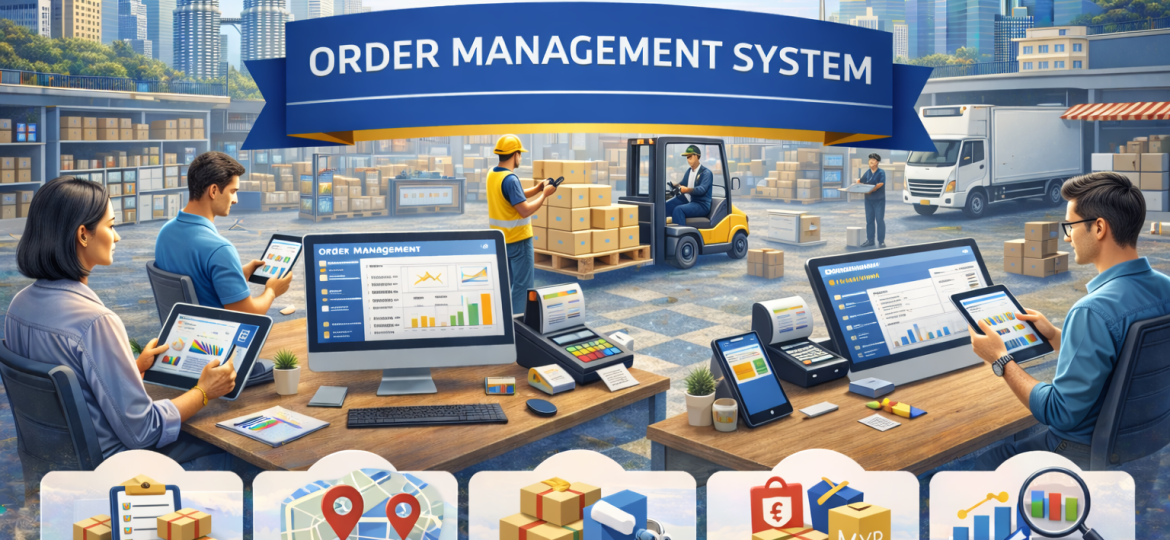
Order Management System: A Comprehensive Guide for Malaysian Businesses
In the fast-paced world of business, particularly for small and medium-sized enterprises (SMEs) in Malaysia, efficient order management is essential for maintaining a smooth workflow, improving customer satisfaction, and ensuring business growth. An order management system (OMS) helps businesses streamline their order fulfillment process, reduce errors, and optimize inventory management.
This blog post will explore the concept of order management systems, how they work, their benefits, and why SMEs in Malaysia should consider adopting them. We’ll also delve into the best OMS solutions for Malaysian businesses and provide practical tips for implementing them effectively.
What is an Order Management System?
An order management system (OMS) is a software solution that helps businesses manage and streamline their order processing workflow. It provides a centralized platform for handling orders from various sales channels, such as e-commerce stores, physical retail locations, or wholesale partners.
Key features of an OMS typically include:
Order tracking: Monitors the status of orders from placement to delivery.
Inventory management: Syncs stock levels in real-time to ensure that products are available for customers.
Order fulfillment: Automates picking, packing, and shipping processes to streamline fulfillment.
Customer communication: Sends order confirmations, shipping updates, and customer support information.
Integration: Syncs with other business systems, such as accounting and customer relationship management (CRM) software.
An OMS centralizes and automates the entire order lifecycle, improving efficiency and reducing errors that can occur with manual order processing.
The Importance of an Order Management System for Malaysian SMEs
For businesses in Malaysia, especially SMEs, having a robust order management system can be a game-changer. Here are several reasons why an OMS is crucial:
1. Efficient Order Processing
One of the most significant challenges for SMEs is managing orders manually, which can lead to delays and errors. With an order management system, businesses can automate order processing, reducing the time spent on administrative tasks and ensuring that orders are handled quickly and accurately.
2. Enhanced Customer Experience
An OMS allows businesses to offer real-time order tracking and automated updates, improving the overall customer experience. Customers appreciate being able to track their orders and receive timely notifications, which can enhance their satisfaction and loyalty.
3. Streamlined Inventory Management
Inventory mismanagement is a common issue for businesses, especially those managing multiple sales channels. An OMS integrates with inventory systems, ensuring that stock levels are always up to date and helping businesses avoid stockouts and overstocking.
4. Better Financial Control
By automating order processing, an OMS can help businesses improve cash flow by ensuring timely order fulfillment and payment processing. The system also provides valuable data that can assist with financial reporting and planning.
5. Data-Driven Insights
Most order management systems come with reporting and analytics features that help businesses track order trends, identify bottlenecks, and make informed decisions. These insights can help businesses optimize their sales strategies and improve operational efficiency.
How an Order Management System Works
An order management system automates and optimizes the entire order lifecycle. Here’s a breakdown of how it typically works:
1. Order Placement
Orders can come from various channels, including online stores, physical retail locations, or even through direct sales teams. The OMS captures these orders and stores them in one centralized location for easy tracking.
2. Inventory Check and Allocation
The OMS checks inventory levels in real time, ensuring that products are available for fulfillment. If stock is available, the system allocates it to the order. If stock is low or out of stock, the system can notify the business to reorder or update customers on the delay.
3. Order Fulfillment
Once the order is confirmed and inventory is allocated, the OMS automates the fulfillment process. This includes generating picking lists, coordinating with warehouses or suppliers, and arranging packaging and shipping.
4. Shipping and Delivery
The OMS generates shipping labels and sends tracking information to the customer. It can also automate updates for the customer on their order’s status, improving communication and transparency.
5. Invoicing and Payment Processing
After the order is fulfilled, the OMS can generate invoices and process payments. This ensures that businesses can quickly reconcile sales and maintain accurate financial records.
6. Customer Support and Returns
An effective OMS should also handle customer service inquiries and returns management. If a customer needs to return a product, the OMS can generate return labels, track returns, and update inventory accordingly.
Benefits of Implementing an Order Management System
Adopting an order management system offers several benefits to Malaysian SMEs, ranging from operational improvements to enhanced customer satisfaction. Here’s a closer look at the key advantages:
1. Improved Operational Efficiency
By automating and streamlining the order fulfillment process, an OMS significantly reduces manual labor and human error. This leads to faster processing times and fewer delays, making your business more agile and efficient.
2. Centralized Order Tracking
With an OMS, businesses can track orders from multiple sales channels in one centralized system. This eliminates the need for manual reconciliation and ensures that businesses have complete visibility of their order pipeline at all times.
3. Cost Savings
An OMS reduces operational costs by improving efficiency, minimizing errors, and optimizing inventory management. By automating processes, businesses can reduce the time spent on administrative tasks, ultimately saving money on labor and resources.
4. Scalability
As businesses grow, the volume of orders increases. An order management system can scale with your business, handling more orders, sales channels, and inventory locations without the need for major operational changes. This makes it an ideal solution for growing SMEs in Malaysia.
5. Better Customer Experience
With automated updates and real-time order tracking, customers can stay informed about their purchases. Providing transparency and improving the delivery process enhances customer satisfaction and helps build long-term customer relationships.
Best Order Management Systems for Malaysian Businesses
There are numerous order management systems available to Malaysian businesses, each offering unique features tailored to specific business needs. Below are some of the top solutions to consider:
1. Zoho Inventory
Overview: Zoho Inventory is a cloud-based order management system designed for small and medium-sized businesses. It offers real-time tracking, inventory management, order fulfillment, and integration with e-commerce platforms.
Key Features:
Multi-channel selling (Shopify, WooCommerce, etc.)
Real-time inventory tracking
Automated order processing
Integration with Zoho Books and Zoho CRM
Affordable pricing for small businesses
Best For: SMEs looking for an affordable, user-friendly order management system with powerful features.
2. TradeGecko (QuickBooks Commerce)
Overview: TradeGecko, now part of QuickBooks Commerce, is an all-in-one order management system that offers inventory control, order fulfillment, and integration with various sales channels.
Key Features:
Multi-location inventory management
Integration with QuickBooks, Shopify, and other platforms
Automated order processing and invoicing
Real-time inventory updates
Analytics and reporting features
Best For: E-commerce businesses and wholesalers who need a scalable, integrated solution.
3. Cin7
Overview: Cin7 is a robust order management system that integrates inventory, POS, and order fulfillment, making it a great option for businesses that need comprehensive supply chain management.
Key Features:
Multi-location inventory management
Integration with e-commerce platforms, POS, and accounting systems
Real-time tracking and order fulfillment
Built-in warehouse management and order picking tools
Reporting and analytics for better decision-making
Best For: Larger SMEs or businesses with complex supply chain and order management needs.
4. Machi
Overview: Machi is a Malaysian-based order management system designed specifically for local businesses. It offers inventory tracking, order management, and invoicing features, making it an ideal choice for SMEs in Malaysia.
Key Features:
Local customer support and training
Real-time stock tracking
Multi-currency support
Simple and user-friendly interface
Affordable pricing for Malaysian SMEs
Best For: Malaysian SMEs looking for an affordable, locally supported order management solution.
Pricing for Order Management Systems
The cost of implementing an order management system in Malaysia varies depending on the provider, the number of users, and the features required. Here’s a breakdown of typical pricing:
Free Plans: Some order management systems, like Zoho Inventory, offer free plans for small businesses with basic needs (typically for businesses with fewer than 50 orders per month).
Subscription-Based Plans: Pricing generally ranges from MYR 100 to MYR 500 per month, depending on the features and the number of users. More advanced systems like Cin7 may be priced higher.
Custom Pricing: Larger businesses or those with specific requirements may need custom pricing plans. Providers like QuickBooks Commerce and Cin7 offer tailored solutions based on your business size and needs.
Frequently Asked Questions (FAQs)
1. What is the difference between order management and inventory management?
Order management involves handling the entire order lifecycle, including order placement, tracking, and fulfillment, while inventory management focuses on tracking and controlling stock levels. While both are related, order management is broader and includes inventory management as one component.
2. How does an order management system help with customer service?
An OMS helps by providing real-time order tracking, automating customer communications (e.g., order confirmations and shipping updates), and improving fulfillment times, leading to a better overall customer experience.
3. Can an order management system integrate with my e-commerce store?
Yes, most order management systems, such as Zoho Inventory, QuickBooks Commerce, and Cin7, offer integrations with popular e-commerce platforms like Shopify, WooCommerce, and Lazada, allowing for seamless order processing and inventory synchronization.
4. Is it difficult to implement an order management system?
Implementing an OMS can be straightforward, especially with user-friendly systems like Zoho Inventory or Machi. However, the complexity depends on your business size and requirements. Some systems may require setup time, especially if you’re integrating multiple channels or systems.
5. How do I choose the right order management system for my business?
Consider factors such as your business size, the number of sales channels, your budget, and any specific requirements like multi-location inventory management or advanced reporting. Systems like Zoho Inventory are great for small businesses, while Cin7 offers more comprehensive solutions for larger operations.
Conclusion: Streamline Your Business with the Right Order Management System
Efficient order management is essential for Malaysian SMEs looking to improve operational efficiency, reduce errors, and enhance customer satisfaction. By adopting the right order management system, businesses can automate and streamline their entire order process, from order placement to fulfillment and payment.
With options like Zoho Inventory, QuickBooks Commerce, and Machi, Malaysian SMEs can find the perfect solution to meet their needs and scale their operations. Take the first step toward a more efficient order management system today and optimize your business for growth and success!
