


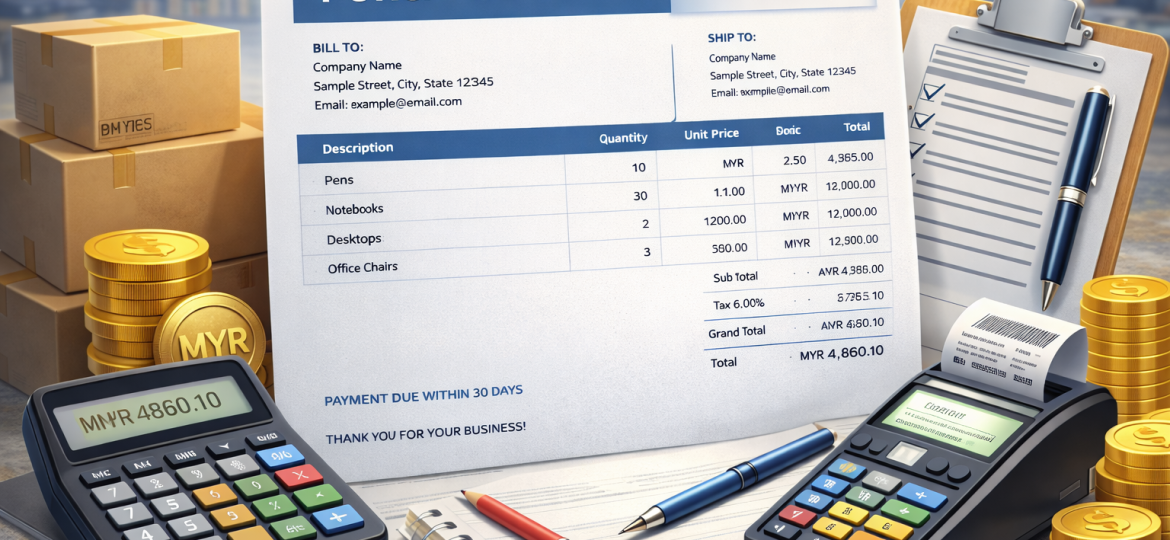
Purchase Order Invoice: Streamlining Your Procurement Process for Malaysian Businesses
For businesses in Malaysia, managing financial transactions efficiently is crucial to maintaining smooth operations. One essential aspect of this process is the purchase order invoice. This document not only ensures that businesses track purchases effectively but also helps streamline payments, maintain accurate records, and improve communication between suppliers and buyers.
In this comprehensive guide, we’ll explore what a purchase order invoice is, how it fits into the procurement process, and why it’s crucial for Malaysian SMEs. We’ll also look at the benefits of using a purchase order invoice, the steps involved in creating one, and the best practices to optimize your procurement process.
What is a Purchase Order Invoice?
Before diving into the intricacies of using a purchase order invoice, let’s first define what it is. A purchase order invoice is a document issued by a supplier to a business after a purchase order has been placed, confirming the details of the products or services being provided and the agreed-upon price.
This invoice typically includes the following details:
-
Purchase order number: A unique identifier linking the purchase order and invoice.
-
Supplier information: Supplier’s name, address, and contact details.
-
Buyer information: Your business’s name, address, and contact details.
-
Product or service details: Descriptions of the items purchased, their quantities, unit prices, and total cost.
-
Tax and discounts: The applicable taxes (like SST in Malaysia) and any discounts.
-
Payment terms: The due date for payment, early payment discounts, or penalties for late payments.
The purchase order invoice serves as a formal request for payment and acts as a key document for financial tracking, auditing, and tax reporting.
The Role of Purchase Order Invoice in the Procurement Process
The purchase order invoice plays a pivotal role in the procurement process for Malaysian businesses. It ensures the smooth flow of goods or services from supplier to buyer and helps businesses keep track of their purchases. Here’s how it fits into the broader procurement cycle:
1. Creating the Purchase Order
Before an invoice is generated, a business must create a purchase order (PO). The PO is a formal request to a supplier for specific products or services, including quantities, prices, and agreed delivery timelines. The purchase order invoice is then created after the supplier fulfills the order.
2. Supplier Confirmation
Once the supplier receives the purchase order, they review it and provide the goods or services as requested. After fulfilling the order, the supplier generates the purchase order invoice as a formal request for payment.
3. Invoice Verification and Payment
The buyer (your business) verifies the purchase order invoice to ensure that the details match the original purchase order. Once confirmed, the payment is processed based on the terms outlined in the invoice.
4. Record Keeping and Reporting
Once the invoice is paid, it is recorded for accounting and tax purposes. The purchase order invoice serves as evidence of the transaction, which is important for maintaining accurate financial records and staying compliant with Malaysian tax laws.
Benefits of Using a Purchase Order Invoice
The use of a purchase order invoice provides numerous advantages, particularly for small and medium-sized enterprises (SMEs) in Malaysia. Here are some key benefits:
1. Improved Financial Control
A purchase order invoice allows businesses to maintain better control over their spending. By clearly documenting the terms of purchase, businesses can track their financial commitments and ensure they are staying within budget.
2. Reduced Errors and Disputes
Having a formalized purchase order invoice process reduces the risk of errors, such as incorrect pricing or mismatched quantities. This helps prevent disputes between buyers and suppliers and ensures that both parties are on the same page regarding terms and expectations.
3. Streamlined Payment Process
A purchase order invoice clearly outlines the payment terms, making it easier for businesses to track when payments are due. Automated reminders for upcoming payments ensure timely processing, helping businesses maintain healthy cash flow.
4. Tax Compliance and Record Keeping
In Malaysia, businesses must comply with the Sales and Service Tax (SST) regulations. A purchase order invoice helps businesses accurately track the taxes paid on their purchases, ensuring that they meet tax requirements and are prepared for audits.
5. Improved Supplier Relationships
Clear communication and accurate invoicing help build strong relationships with suppliers. By processing purchase order invoices promptly, businesses demonstrate professionalism, which can result in better terms, discounts, and long-term partnerships with suppliers.
How to Create a Purchase Order Invoice
Creating a purchase order invoice is straightforward, but accuracy is key. Here are the steps to creating a purchase order invoice that’s clear and compliant:
1. Include Essential Information
Make sure the invoice contains all the necessary details, such as:
-
PO number: Link the invoice to the original purchase order.
-
Itemized list of goods/services: Include product names, quantities, unit prices, and total amounts.
-
Supplier and buyer details: Include full contact information for both parties.
-
Payment terms: Clearly state the payment due date and any applicable discounts or late fees.
2. Check for Accuracy
Before sending the invoice, verify that all details match the original purchase order. Ensure that the items, quantities, and prices are accurate, and that any taxes or discounts are correctly applied.
3. Ensure Compliance with Malaysian Tax Laws
Make sure that your purchase order invoice complies with Malaysia’s SST requirements. The correct tax rate should be applied to the goods or services being purchased, and the tax amount should be clearly stated.
4. Use Professional Formatting
A well-organized invoice with clear headings and a professional layout not only looks good but also ensures that your business comes across as professional to clients and suppliers.
5. Send the Invoice Promptly
Once the goods or services are delivered, send the purchase order invoice promptly. This will help ensure timely payments and maintain good supplier relationships.
Best Practices for Managing Purchase Order Invoices
To ensure that your purchase order invoices are effectively managed, consider implementing the following best practices:
1. Use Invoice Management Software
Invoice management software helps automate and streamline the invoicing process. Solutions like QuickBooks, Zoho Invoice, and FreshBooks can help automate invoice creation, tracking, and payment reminders, reducing the time spent on manual tasks and improving accuracy.
2. Create a Clear Approval Process
Establish an approval process for purchase orders and invoices. This ensures that all invoices are verified before payment is made and helps reduce the risk of fraud or errors.
3. Integrate with Accounting Systems
Integrating your purchase order invoice system with your accounting software will streamline financial reporting and ensure accurate record-keeping. This also eliminates the need for duplicate data entry.
4. Maintain Organized Records
Keep a digital or physical record of all purchase order invoices, sorted by date, supplier, or category. This helps you stay organized and makes it easier to retrieve invoices when needed for audits or tax filing.
5. Establish Clear Payment Terms
Set clear payment terms with your suppliers to avoid delays. Clearly communicate the due dates and any late fees or early payment discounts to ensure that payments are made on time.
Top Invoice Software Solutions for Managing Purchase Order Invoices in Malaysia
Here are some of the best invoice applications available in Malaysia that can help businesses manage purchase order invoices:
1. QuickBooks Online
Overview: QuickBooks Online is a comprehensive accounting solution that includes invoicing features, such as purchase order invoice tracking and tax calculation. It’s ideal for businesses that need both accounting and invoicing in one solution.
Key Features:
-
Multi-currency support
-
Automatic tax calculation (SST)
-
Integration with e-commerce platforms
-
Mobile access for invoicing on the go
Best For: Small to medium-sized businesses looking for an integrated accounting and invoicing solution.
2. Zoho Invoice
Overview: Zoho Invoice is a user-friendly, cloud-based invoicing system that offers customizable templates and automated features. It also integrates seamlessly with other Zoho products, making it an excellent choice for businesses looking for a comprehensive solution.
Key Features:
-
Customizable invoice templates
-
Multi-currency and multi-language support
-
Automated payment reminders
-
Integration with Zoho Books for accounting
Best For: Businesses looking for a simple, affordable invoicing solution.
3. Machi
Overview: Machi is a local Malaysian invoicing solution designed specifically for SMEs. It provides purchase order invoice tracking, simple invoicing, and integration with accounting systems.
Key Features:
-
Real-time invoice tracking
-
Multi-currency invoicing
-
Local customer support
-
Affordable pricing for SMEs
Best For: Malaysian SMEs looking for an affordable and locally supported invoicing system.
Pricing for Invoice Software in Malaysia
The cost of invoice software in Malaysia can vary depending on the features and scalability of the tool. Here’s a general pricing breakdown:
-
Free Plans: Some providers, like Zoho Invoice, offer free plans for small businesses with basic invoicing needs (e.g., up to 5 invoices per month).
-
Subscription-Based Plans: Subscription fees typically range from MYR 50 to MYR 300 per month, depending on the number of users, features, and integrations.
-
Custom Pricing: Larger businesses or those with more complex needs may require custom pricing plans. Providers like QuickBooks Online and Zoho Invoice offer tailored solutions based on your specific requirements.
Frequently Asked Questions (FAQs)
1. What is the difference between a purchase order and a purchase order invoice?
A purchase order is a document created by the buyer that requests goods or services from a supplier, while a purchase order invoice is an invoice issued by the supplier to request payment for the goods or services delivered as per the purchase order.
2. How do I create a purchase order invoice?
To create a purchase order invoice, ensure that it includes the purchase order number, supplier details, itemized list of products/services, tax calculations, and payment terms. Verify the information against the purchase order and send it promptly to the buyer.
3. What are the benefits of using invoice software?
Invoice software automates invoicing, reduces errors, speeds up payment collection, helps with tax compliance, and ensures better record-keeping, saving time and money.
4. Can I integrate my purchase order invoice system with my accounting software?
Yes, many invoice applications, such as QuickBooks Online and Zoho Invoice, offer integrations with accounting software, streamlining the invoicing and financial management processes.
5. How do I ensure compliance with Malaysian tax laws when creating invoices?
Using an invoice application that automatically applies the correct tax rates (such as SST in Malaysia) helps ensure compliance. Additionally, maintaining accurate records of invoices and taxes simplifies tax reporting.
Conclusion: Streamline Your Business with Purchase Order Invoices
Using purchase order invoices is a crucial step in streamlining your procurement and financial processes in Malaysia. By automating this aspect of your business with reliable invoice applications, you can reduce errors, improve cash flow, and maintain professionalism with your suppliers and clients.
Explore the various tools available, such as QuickBooks Online, Zoho Invoice, and Machi, to find the right solution that fits your business needs. Start managing your purchase order invoices efficiently today to ensure your business remains organized, compliant, and ready for growth.
