


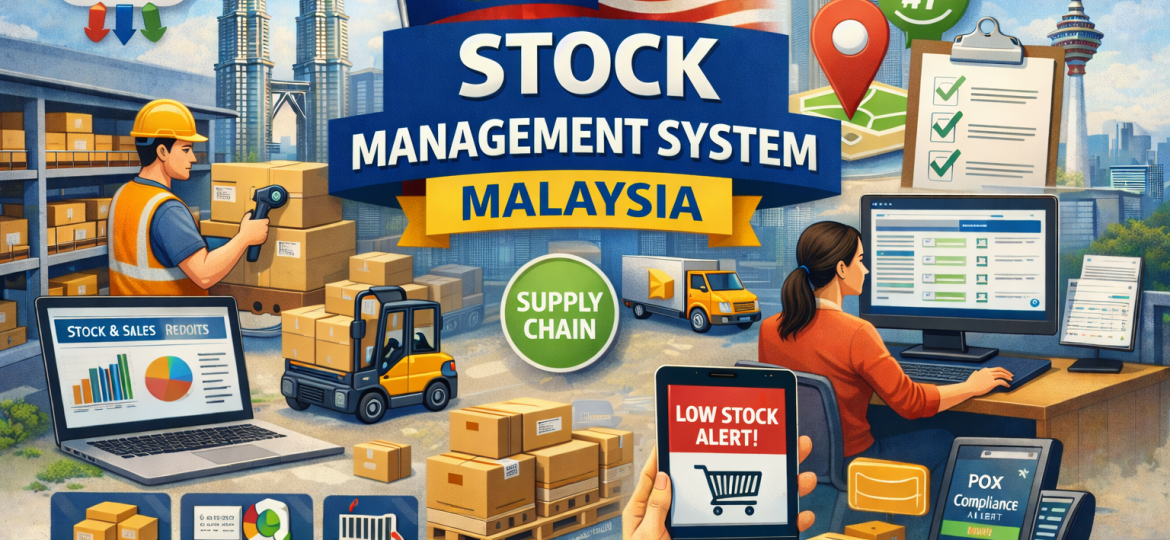
Stock Management System Malaysia:A Game-Changer for Singapore Businesses
Efficient management of inventory and accurate billing are critical for businesses to thrive. For small and medium enterprises (SMEs) in Singapore, managing both these functions manually can be time-consuming and error-prone. A sophisticated Stock Management System Malaysia helps integrate inventory management with billing processes, streamlining operations and improving both accuracy and efficiency. In this blog post, we will explore what an Stock Management system Manaysia is, its key features, benefits, pricing, and how it can support Singapore businesses in achieving their growth goals.
What Is an Inventory Billing System?
An inventory billing system is a comprehensive software solution that combines two critical aspects of business operations: inventory management and billing. It allows businesses to automate and synchronize inventory tracking and invoicing processes. Through real-time updates, the system ensures that stock levels are continuously monitored and invoices are generated automatically based on sales and stock movements.
For Singapore SMEs, an inventory billing system can eliminate errors that occur when managing inventory and billing separately. By automating these processes, businesses can improve their operational efficiency, reduce manual data entry, and ensure accurate invoicing. This tool is especially important for businesses dealing with high volumes of products or frequent transactions, where manual tracking can become inefficient and prone to mistakes.
Key Features of an Inventory Billing System
An inventory billing system is packed with features that help businesses optimize their inventory and billing workflows. Here are some of the most essential features:
Real-Time Inventory Tracking
The system provides up-to-date information on inventory levels, helping businesses track products as they are sold, received, or returned. This helps avoid stockouts, prevent overstocking, and ensure that business operations run smoothly.Automated Billing and Invoicing
The system automatically generates invoices based on sales data. This reduces the need for manual billing, cuts down on human error, and ensures that customers are billed correctly and promptly.Multi-Channel Support
For businesses selling through multiple channels (e.g., online stores, brick-and-mortar shops, and third-party platforms), the inventory billing system ensures that stock levels and sales data are synchronized across all locations, preventing discrepancies and improving inventory visibility.Integration with Accounting and ERP Systems
An inventory billing system often integrates with accounting software and Enterprise Resource Planning (ERP) systems. This enables seamless data transfer, reduces manual input, and ensures that financial records and inventory data are aligned.Customizable Reporting and Analytics
The system offers reports and analytics on inventory levels, sales trends, and billing cycles. These insights help businesses identify patterns, optimize stock, and forecast demand more effectively.Tax Calculation and Compliance
Most inventory billing systems can calculate taxes based on local regulations, ensuring that businesses remain compliant with Singapore’s tax laws. This feature reduces the burden of manual tax calculations and minimizes the risk of errors.Mobile Access
Many systems offer mobile applications or cloud-based access, enabling business owners and employees to manage inventory and generate invoices on-the-go. This flexibility is crucial for businesses that need real-time data access from multiple locations.
Benefits of Using an Inventory Billing System for Singapore Businesses
1. Enhanced Efficiency and Time Savings
Manual inventory tracking and billing can be time-consuming and prone to errors. By automating both processes, businesses can save valuable time and resources. Employees can focus on higher-value tasks, such as customer service and business development, rather than dealing with routine administrative work.
2. Improved Accuracy and Reduced Errors
Manual processes are more susceptible to human errors, such as incorrect inventory counts, pricing mistakes, or inaccurate invoices. An inventory billing system minimizes these risks by automating key functions. This ensures that businesses have accurate stock data and generate correct invoices every time, reducing costly mistakes.
3. Better Decision-Making and Insights
With real-time data and reporting features, businesses can make informed decisions about their inventory and billing processes. By analyzing trends in stock levels and sales performance, businesses can forecast demand, optimize inventory ordering, and adjust their pricing strategies. This data-driven approach helps SMEs make decisions that improve profitability.
4. Improved Cash Flow Management
An inventory billing system accelerates the billing process, ensuring that customers are invoiced promptly and payments are tracked efficiently. By reducing delays in invoicing and improving payment collection, businesses can enhance cash flow and invest in growth opportunities.
5. Streamlined Operations Across Multiple Locations
For businesses with multiple locations, managing inventory and billing can become complex. An integrated inventory billing system helps streamline these operations by providing a centralized platform to track stock levels, sales data, and billing information across all locations. This reduces the chances of discrepancies and ensures consistency in inventory and invoicing.
6. Compliance with Local Tax Regulations
With built-in tax calculation features, an inventory billing system ensures that businesses comply with Singapore’s Goods and Services Tax (GST) regulations. Automated tax calculations reduce the risk of underreporting or overreporting taxes, helping businesses stay compliant and avoid penalties.
Pricing and Cost of Inventory Billing Systems
The cost of an inventory billing system depends on several factors, including the system’s features, the number of users, and the level of support provided. Typically, businesses can expect to pay:
1. Basic Plans
For small businesses with basic inventory management and billing needs, entry-level systems may cost around $20 to $50 per month. These plans typically offer core features such as inventory tracking and basic invoicing.
2. Mid-Tier Plans
For businesses that need more advanced features like multi-location support, reporting tools, and tax calculations, prices typically range from $100 to $300 per month. These plans are ideal for growing businesses looking for a scalable solution.
3. Enterprise Solutions
Larger businesses or those with complex inventory needs can expect to pay $500 per month and up for enterprise-grade solutions. These systems often offer fully customizable features, enhanced security, and dedicated customer support.
When evaluating the cost, it’s important to consider the total value a system will bring to your business. While higher-tier systems may come with a higher price tag, they often offer more advanced features that can result in significant time savings, improved accuracy, and better financial management in the long run.
How to Choose the Right Inventory Billing System
Choosing the right inventory billing system for your business involves evaluating several factors to ensure that the system meets your needs. Here’s what to consider:
1. Business Size and Complexity
The system you choose should be appropriate for the size and complexity of your business. A small business may only need a basic inventory and billing system, while a larger business may require a more robust solution with multi-location and multi-channel support.
2. Ease of Use
The system should be intuitive and easy to use. A user-friendly interface ensures a smooth implementation process and minimizes the need for extensive training.
3. Integration Capabilities
Make sure the system integrates with your existing business tools, such as accounting software, e-commerce platforms, and point-of-sale systems. Integration reduces manual data entry and helps maintain consistency across all systems.
4. Customer Support
Reliable customer support is essential, especially when implementing new software. Look for providers that offer robust support channels, such as phone, email, or live chat, and ensure they provide timely assistance when needed.
5. Scalability
As your business grows, your needs may evolve. Choose a system that can scale with your business, accommodating more users, products, and locations as you expand.
Frequently Asked Questions (FAQs)
1. What is an inventory billing system?
An inventory billing system integrates inventory management with billing and invoicing processes, helping businesses automatically update stock levels and generate invoices in real-time.
2. How does an inventory billing system benefit my business?
It helps streamline inventory management, reduce errors, save time, and improve customer satisfaction. It also provides valuable insights for better decision-making and ensures accurate billing and tax compliance.
3. How much does an inventory billing system cost?
Costs vary depending on features and business size. Basic plans typically start at $20 to $50 per month, mid-tier plans range from $100 to $300 per month, and enterprise solutions can cost upwards of $500 per month.
4. Can an inventory billing system integrate with other business tools?
Yes, most inventory billing systems can integrate with accounting software, e-commerce platforms, and ERP systems, streamlining business operations and reducing manual data entry.
5. Is it easy to use an inventory billing system?
Most modern inventory billing systems are designed to be user-friendly and require minimal training. Look for a system that offers an intuitive interface and excellent customer support.
Conclusion: Take Control of Your Inventory and Billing with the Right System
For Singapore businesses, an inventory billing system is more than just a tool—it’s a crucial part of improving operational efficiency, accuracy, and customer satisfaction. By automating both inventory management and invoicing processes, businesses can streamline their workflows, reduce errors, and enhance financial management. Whether you’re a small business or a growing enterprise, adopting an inventory billing system can help you optimize your operations, save time, and boost profitability.
Consider investing in an inventory billing system today and take your business to the next level with better control over your stock and billing processes.
