


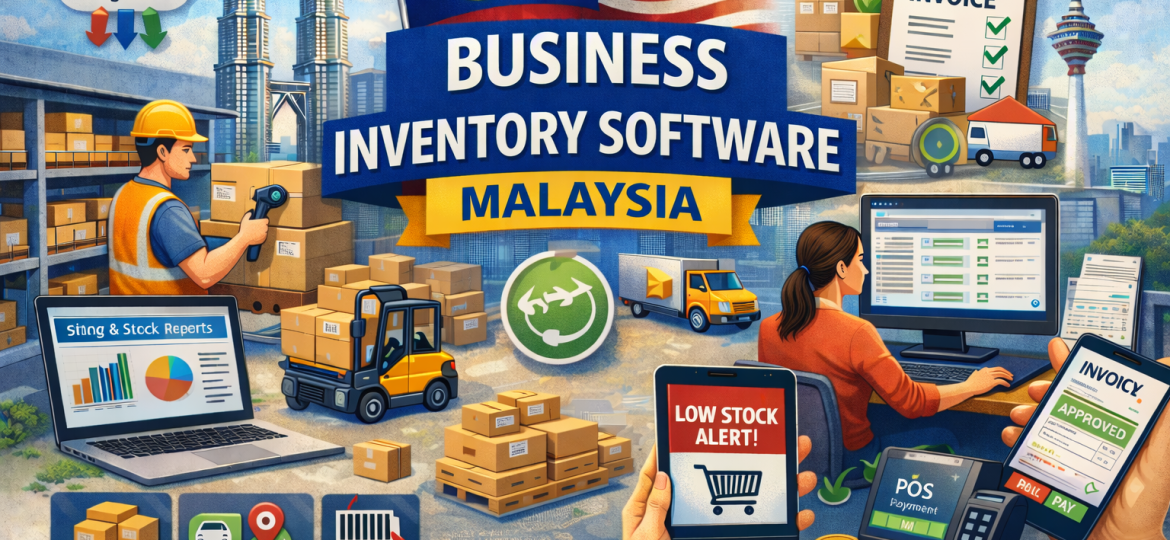
Business Inventory Software: The Essential Tool for Singapore SMEs to Streamline Operations
Business Inventory Software Malaysia For small and medium enterprises (SMEs) in Singapore, effective inventory management is the backbone of smooth operations. Without accurate tracking, businesses can face issues such as overstocking, stockouts, and inefficient resource allocation, all of which can negatively impact customer satisfaction and profit margins. That’s where business inventory software comes in—offering businesses a streamlined, automated solution to manage their stock and supply chain operations efficiently.
In this detailed guide, we’ll explore what business inventory software is, why it’s essential for Singapore SMEs, the key features to look for, its benefits, and how it can drive business growth. Whether you’re running a small retail store or an e-commerce business, this post will help you understand how the right inventory management solution can transform your business.
The Importance of Inventory Management for Singapore Businesses
For businesses in Singapore, particularly SMEs, inventory management is often a balancing act between meeting customer demand and managing resources efficiently. Poor inventory control can lead to unnecessary costs, lost sales, and missed opportunities. However, traditional methods—manual tracking via spreadsheets, paper records, or outdated software—often create bottlenecks and errors that make scaling difficult.
With the growing demands of a globalized market, and Singapore’s position as a bustling hub for international trade, businesses cannot afford to rely on old practices. Business inventory software offers an intelligent solution to these challenges by providing real-time tracking, insights into stock levels, and integration with other business functions like accounting and order management.
What Is Business Inventory Software?
Business inventory software is a digital tool designed to help businesses track their products, materials, or goods throughout the supply chain. This software offers a centralized platform for managing stock, optimizing reorder points, automating processes, and ensuring accuracy in tracking inventory.
By automating inventory tasks, business inventory software minimizes human errors, reduces manual effort, and allows business owners to make informed decisions based on real-time data.
Key Features to Look for in Business Inventory Software
When selecting the right business inventory software for your Singapore-based SME, it’s crucial to consider several factors. The following key features can help ensure that the software aligns with your business needs:
1. Real-Time Inventory Tracking
One of the most important features of business inventory software is the ability to track stock levels in real-time. This helps businesses avoid overstocking or running out of products. Real-time tracking also allows you to manage your inventory across multiple locations or warehouses, providing a comprehensive view of your stock.
2. Barcode Scanning and Integration
Barcode scanning is a critical feature for quickly updating stock levels and improving inventory accuracy. Many inventory management systems integrate with barcode scanners to streamline stocktaking, reduce errors, and speed up inventory processes. Integration with other tools like point-of-sale (POS) systems and e-commerce platforms ensures seamless operations.
3. Reporting and Analytics
Business inventory software should offer powerful reporting and analytics tools that provide insights into inventory trends, stock turnover rates, and order history. This data can help businesses make informed decisions about reordering, sales forecasting, and budgeting.
4. Automation and Alerts
Automation features, such as automatic reordering when stock reaches a predefined level, help eliminate manual tracking and ordering processes. Alerts for low stock levels, expiring items, or upcoming shipments can ensure that businesses stay on top of their inventory needs.
5. Multi-Location and Multi-Channel Support
For businesses in Singapore that have multiple locations or sell through various channels (e.g., brick-and-mortar stores, e-commerce platforms, or third-party marketplaces), inventory software must support multi-location management. This feature ensures that stock levels are accurately updated across all channels and locations, preventing stock discrepancies and ensuring consistency.
Benefits of Using Business Inventory Software for Singapore SMEs
1. Increased Efficiency and Time Savings
By automating routine tasks like stock updates, order processing, and reporting, business inventory software frees up valuable time for employees to focus on more strategic activities. This increased efficiency means businesses can handle more orders, reduce administrative overhead, and ultimately improve profitability.
2. Improved Accuracy and Fewer Errors
Human error is inevitable in manual inventory management. Typing mistakes, incorrect stock counts, and missed sales orders can lead to discrepancies that affect customer satisfaction and profit margins. Business inventory software eliminates these errors by automatically updating stock levels and integrating with other tools to ensure accurate data flow throughout the business.
3. Better Decision Making with Real-Time Data
Access to real-time data allows business owners and managers to make better-informed decisions. With up-to-the-minute visibility into stock levels, sales trends, and order history, you can quickly assess whether to reorder products, adjust pricing, or manage your supply chain. This real-time decision-making improves agility and responsiveness in an increasingly competitive market.
4. Cost Savings and Reduced Waste
By improving the accuracy of your inventory data, you can reduce the risk of overstocking or understocking. This ensures that you don’t tie up excess capital in unsold stock or lose out on sales opportunities due to insufficient inventory. Additionally, reducing overstocking and stock wastage helps lower storage costs and minimizes the risk of items expiring or becoming obsolete.
5. Seamless Integration with Other Business Tools
Business inventory software can integrate seamlessly with other critical business tools such as accounting software, CRM systems, and e-commerce platforms. This connectivity reduces the need for manual data entry and ensures that all business functions operate in sync, ultimately improving efficiency and accuracy across the organization.
How to Choose the Right Business Inventory Software for Your Business
When it comes to selecting the right business inventory software for your Singapore SME, consider the following factors:
Business Size and Complexity: If you are a small business with minimal inventory, basic software might be sufficient. Larger businesses with complex inventory needs (e.g., multiple locations or a broad product range) may need more advanced systems.
Ease of Use: Choose software that is user-friendly and easy for your team to adopt. A complex system may require extensive training and ongoing support, which can be costly and time-consuming.
Pricing: Business inventory software comes in various pricing models, from subscription-based plans to pay-per-user options. Make sure to choose a solution that fits within your budget while offering the necessary features for your business.
Scalability: As your business grows, your inventory needs will likely evolve. Choose software that can scale with your business and handle increasing complexity without requiring a major system overhaul.
Cost of Business Inventory Software
The cost of business inventory software can vary widely depending on the features, user count, and type of system you choose. Here’s a rough breakdown:
Basic Plans: Small businesses with basic inventory needs can expect to pay between $20 and $50 per month for entry-level software.
Mid-Tier Plans: For businesses that need more advanced features like multi-location support and reporting, plans typically range from $100 to $300 per month.
Enterprise Solutions: Large businesses or those with highly complex inventory management needs may require enterprise-level software. These systems can cost anywhere from $500 per month and upwards, depending on the scale and customization.
It’s important to evaluate the total cost of ownership (TCO), which includes not only subscription fees but also implementation costs, training, and any necessary integrations with existing systems.
Business Inventory Software Comparison: Choosing Between Local and Global Providers
When comparing options for business inventory software, you may face a choice between local and international providers. Here’s a comparison to help you decide:
1. Local Providers (Singapore/Malaysia)
Proximity: Local providers offer faster customer support due to their proximity. You can expect quicker response times and personalized services.
Customization: Local providers often tailor their solutions to the specific needs of the region, taking into account local business practices, tax regulations, and language preferences.
Pricing: Local providers may offer more competitive pricing for Singapore SMEs, with a better understanding of regional market needs.
2. Global Providers (US/Europe)
Global Reach: For businesses looking to expand globally, international providers may offer robust solutions with features suited for global operations, such as multi-currency support and international shipping.
Advanced Features: Global providers tend to offer more comprehensive features and integrations, though at a higher price point.
Support and Training: International providers may have limited local support, requiring businesses to rely on online resources or customer service based in other time zones.
Frequently Asked Questions (FAQs)
1. What is business inventory software, and why is it important for SMEs in Singapore?
Business inventory software is a cloud-based solution that helps businesses track and manage their stock efficiently. It ensures real-time updates, accurate stock levels, and integration with other business functions, which are crucial for SMEs to streamline operations, reduce costs, and improve decision-making.
2. How much does business inventory software cost?
The cost of business inventory software varies depending on the features and business size. Basic plans can start from $20 per month, while more advanced systems may range from $100 to $500 per month for larger enterprises.
3. Can business inventory software integrate with other tools?
Yes, many business inventory software solutions offer seamless integration with other tools such as accounting software, point-of-sale systems, and e-commerce platforms. This ensures that all business functions work in sync.
4. How do I choose the right inventory management software for my business?
Consider your business size, complexity, and budget. Evaluate key features like real-time tracking, multi-location management, reporting tools, and scalability. Choose software that fits your specific needs and is easy for your team to use.
5. Is business inventory software scalable?
Yes, most modern inventory software solutions are scalable and can grow with your business. They can handle increased complexity as your inventory needs expand, ensuring that you don’t outgrow the system as your business evolves.
Conclusion: Boost Your Business Efficiency with Business Inventory Software
For Singapore SMEs, business inventory software is a game-changer that can significantly improve efficiency, accuracy, and decision-making. By automating inventory management processes, businesses can reduce operational costs, prevent stockouts and overstocking, and improve overall customer satisfaction. If you haven’t already, consider investing in business inventory software to future-proof your operations and drive long-term growth.
Start by evaluating your business’s needs, selecting the right software, and reaping the benefits of better inventory control, all while staying competitive in today’s dynamic business environment.
Lorem ipsum dolor sit amet, consectetur adipiscing elit. Ut elit tellus, luctus nec ullamcorper mattis, pulvinar dapibus leo.
Lorem ipsum dolor sit amet, consectetur adipiscing elit. Ut elit tellus, luctus nec ullamcorper mattis, pulvinar dapibus leo.
