


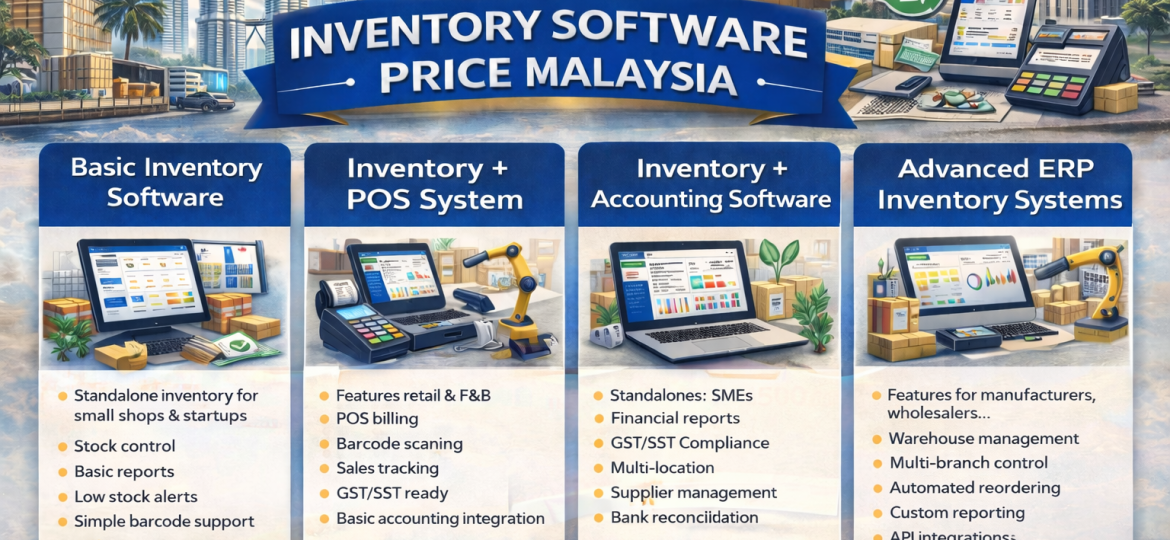
Inventory Software Price Malaysia: A Comprehensive Guide for SMEs
As a business owner in Malaysia, one of your key operational challenges is managing inventory. Whether you’re a retailer, wholesaler, or manufacturer, efficiently managing stock is essential to ensure your business runs smoothly and remains competitive. Fortunately, choosing the right inventory software can help streamline inventory processes, improve efficiency, and boost profitability. Understanding the inventory software price Malaysia businesses typically pay can also help you select a solution that fits your operational needs and budget.
In this guide, we will explore inventory software price Malaysia, what affects the cost, and how businesses can choose the right solution based on their needs and budget. We will also look at the features to consider, the value of investing in the right software, and answer common questions about pricing.
Why Inventory Software is Essential for Malaysian SMEs
Inventory software price Malaysia is designed to automate and manage key tasks like tracking stock levels, processing orders, and generating reports. For small and medium-sized enterprises (SMEs) in Malaysia, investing in inventory management software can provide several key benefits:
-
Real-Time Stock Tracking: Accurately monitor stock levels and movements.
-
Improved Order Fulfillment: Automate order processing to reduce errors and speed up fulfillment.
-
Cost Efficiency: Optimize stock levels to prevent overstocking and stockouts, which directly impacts profitability.
-
Data-Driven Insights: Gain detailed reports and analytics to make informed business decisions.
However, inventory software price in Malaysia can vary significantly depending on the software features, business size, and additional integrations. Understanding the cost breakdown and how software solutions can add value is crucial for making an informed decision.
Key Factors Affecting Inventory Software Price Malaysia
The price of inventory software in Malaysia depends on several factors. Let’s break down the key aspects that influence the cost of inventory software:
1. Features and Functionality
The more advanced the features, the higher the cost. Basic inventory software may include stock tracking and order management, but more comprehensive systems can offer:
-
Multi-location support: Manage inventory across various warehouses or stores.
-
E-commerce integration: Integrate with platforms like Shopify, WooCommerce, or Lazada to synchronize online and offline sales.
-
Automated reordering: Automatically create purchase orders when stock levels fall below a set threshold.
-
Advanced analytics and reporting: Generate detailed insights on stock levels, sales trends, and product performance.
2. Business Size and Scale
The size of your business and your inventory needs will impact the price of Inventory software price Malaysia. Smaller businesses with limited inventory and fewer users may opt for more affordable, basic solutions, while larger businesses with complex inventory needs will likely require a more robust and scalable system.
3. Number of Users
Many inventory software solutions charge based on the number of users. If your business involves multiple departments or locations, you may need to pay for multiple user licenses. Pricing tiers typically vary based on the number of users that can access the system simultaneously.
4. Cloud-Based vs. On-Premise Solutions
-
Cloud-based software: Subscription-based models typically have lower upfront costs and offer flexible pricing, as businesses pay for the features they need and scale as they grow.
-
On-premise software: This requires a one-time upfront cost for the software and hardware, but there may be additional costs for updates, security, and support.
5. Integrations with Other Systems
The more integrations you need, such as linking your Inventory software price Malaysia with accounting software (e.g., QuickBooks), customer relationship management (CRM) tools, or e-commerce platforms, the higher the cost of the solution. Integration fees may be included or charged separately, depending on the provider.
Types of Inventory Software in Malaysia and Their Pricing
The pricing for inventory software in Malaysia can vary widely based on the type of software you choose. Here’s a breakdown of some popular types of inventory software and their typical pricing:
1. Entry-Level Inventory Software Price Malaysia
These solutions are ideal for small businesses with simpler inventory needs. They often include basic features like stock tracking, simple reporting, and order management.
Pricing: Typically between MYR 50 – MYR 200 per month, with some offering free plans for basic features.
Examples:
-
Zoho Inventory: Offers a free plan with limited features, and paid plans start from MYR 200 per month.
-
Machi: Locally developed software with affordable pricing, ideal for Malaysian SMEs. Pricing starts at MYR 100 per month.
2. Mid-Tier Inventory Software Price Malaysia
These solutions are suitable for growing businesses with more complex needs, such as multi-location inventory, multi-channel selling, and integration with accounting systems.
Pricing: Between MYR 300 – MYR 800 per month, depending on the number of users and features.
Examples:
-
QuickBooks Commerce: Starts at MYR 400 per month, with robust features for inventory tracking, order management, and integration with e-commerce platforms.
-
TradeGecko (QuickBooks Commerce): Starting at MYR 350 per month, great for SMEs that need integration with accounting and e-commerce platforms.
3. Enterprise-Level Inventory Software Price Malaysia
These systems are designed for large enterprises or businesses with complex inventory operations. They provide advanced features such as multi-site management, complex supply chain integration, and customizable reporting.
Pricing: MYR 1,000+ per month, typically billed annually, with customization and integration fees.
Examples:
-
Cin7: One of the most advanced solutions for large businesses, offering features like warehouse management and e-commerce integration. Pricing starts around MYR 1,500 per month.
-
SAP Business One: Designed for larger companies, this solution offers full ERP capabilities, including advanced inventory management. Pricing is on request.
Comparing Inventory Software Options for Malaysian SMEs
When evaluating inventory software price Malaysia for your business, it’s essential to consider the specific features and benefits of each option. Here’s a comparison of some popular inventory management solutions in Malaysia:
| Software | Key Features | Price Range | Best For |
|---|---|---|---|
| Zoho Inventory | Multi-location support, automated stock tracking, reporting | MYR 200 – MYR 500 per month | Small businesses and e-commerce |
| QuickBooks Commerce | Multi-channel inventory, integration with QuickBooks, reporting | MYR 400 – MYR 800 per month | Growing businesses and e-commerce |
| Cin7 | Multi-channel, warehouse management, POS integration | MYR 1,500+ per month | Larger businesses with complex needs |
| Machi | Local customer support, real-time tracking, affordable pricing | MYR 100 – MYR 300 per month | Malaysian SMEs looking for simplicity |
Key Considerations for Choosing the Right Inventory Software
-
Features: Choose software that matches your inventory needs. Consider what features you require (e.g., multi-location support, e-commerce integration, automated reordering).
-
Scalability: Opt for software that can grow with your business. As your business expands, you’ll want a system that can handle increased inventory, more users, and additional locations.
-
Ease of Use: Look for software with an intuitive interface that your team can easily adopt. A user-friendly system reduces training time and minimizes errors.
-
Customer Support: Look for a solution with reliable customer support, especially if you’re using the software for the first time. Local support can be especially valuable in Malaysia.
Cost Considerations: Free vs. Paid Inventory Software
One of the key decisions businesses face when choosing an inventory software price Malaysia is whether to go with a free or paid solution. Here’s a breakdown of both options:
Free Inventory Software
Many businesses start with free inventory software to test out its features and determine if it meets their needs. Free versions typically come with limited features such as fewer integrations, limited users, and basic reporting.
Pros:
-
No initial cost.
-
Ideal for small businesses with minimal inventory needs.
Cons:
-
Limited features and functionality.
-
May require an upgrade as your business grows.
Paid Inventory Software
Paid solutions offer a wider range of features, including advanced reporting, integrations, and multi-location support. They are ideal for businesses looking for more scalability and customization.
Pros:
-
Advanced features.
-
Scalable as your business grows.
-
Better customer support.
Cons:
-
Monthly or annual subscription costs.
-
Potentially higher upfront investment.
Frequently Asked Questions (FAQs)
1. How do I determine if inventory management software is right for my business?
Assess your inventory needs, budget, and business growth potential. If you handle a small inventory, free or entry-level software may suffice. For growing businesses or complex inventory needs, investing in paid software with more features is likely a better fit.
2. Can inventory software integrate with my e-commerce platform?
Yes, many inventory management systems, such as QuickBooks Commerce and Zoho Inventory, integrate seamlessly with popular e-commerce platforms like Shopify, WooCommerce, and Lazada, allowing businesses to track inventory across multiple sales channels.
3. How can I reduce inventory management costs with software?
By automating stock tracking, order processing, and stock replenishment, inventory software helps minimize human error and reduce overhead costs associated with manual processes. It also helps optimize stock levels, preventing overstocking and reducing storage costs.
4. What is the difference between inventory management software and ERP software?
Inventory management software focuses specifically on inventory tracking and order management. ERP (Enterprise Resource Planning) software is a more comprehensive system that integrates inventory management with other business functions like accounting, HR, and customer relationship management.
5. Is inventory software scalable?
Yes, many inventory management systems, such as Cin7 and QuickBooks Commerce, are designed to scale with your business. As your inventory needs grow, these systems can handle larger volumes, more locations, and additional sales channels.
Conclusion: Invest in the Right Inventory Software for Your Business
For Malaysian SMEs, inventory management software is an essential tool that can help streamline operations, improve accuracy, and boost profitability. By investing in the right system, businesses can optimize stock levels, reduce costs, and provide better customer service.
Whether you choose Zoho Inventory, QuickBooks Commerce, or a local solution like Machi, the key is to select software that fits your current needs while being scalable for future growth. Start evaluating your options today and take control of your inventory management to ensure long-term success.
