


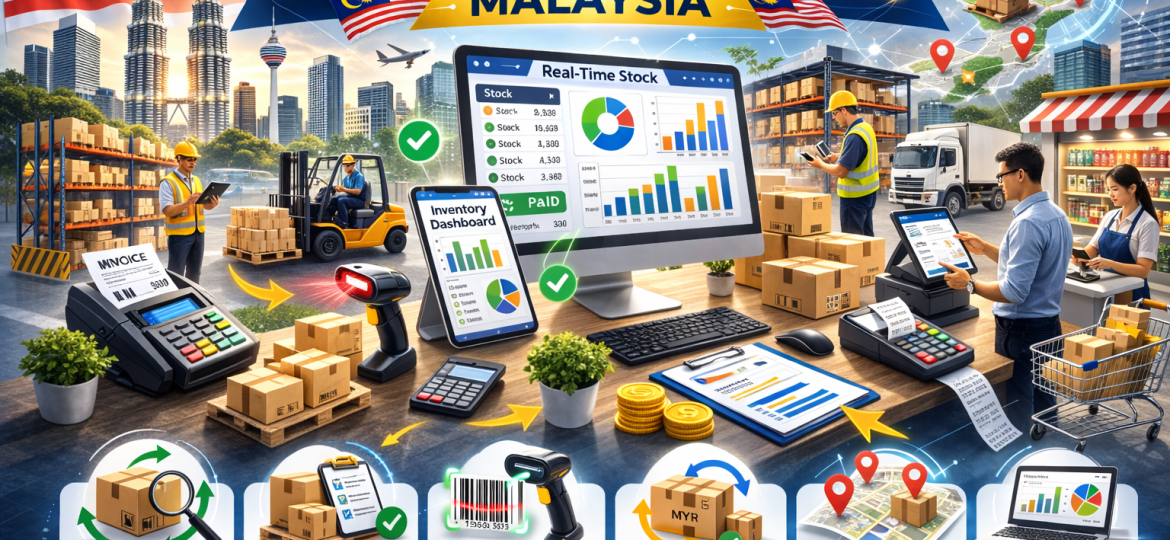
Inventory Management Malaysia: Essential Strategies for Streamlining Operations
Managing inventory is one of the most critical tasks for businesses in Malaysia, especially small and medium-sized enterprises (SMEs). Without an efficient inventory management system, businesses risk facing issues such as overstocking, stockouts, and poor cash flow. These challenges can significantly impact profitability and customer satisfaction. That’s why inventory management Malaysia has become essential for ensuring smooth operations, optimizing resources, and enhancing business growth.
In this guide, we’ll explore the importance of inventory management for Malaysian businesses, the benefits of implementing a proper system, and the top tools available to streamline inventory processes. We’ll also cover the costs, best practices, and how SMEs can improve their stock management to stay competitive in today’s fast-paced market.
Why Inventory Management is Crucial for Malaysian SMEs
For SMEs in Malaysia, managing inventory efficiently is a key element of business success. Proper inventory management Malaysia ensures that products are available when customers need them, while also preventing unnecessary costs associated with excess stock. Here’s why inventory management Malaysia is so crucial for local businesses:
1. Optimizing Cash Flow
When inventory is poorly managed, businesses can either overstock or understock, both of which can lead to cash flow issues. Overstocking ties up capital in unsold goods, which can be spent elsewhere. Conversely, understocking leads to missed sales opportunities and dissatisfied customers. A well-managed inventory ensures that you’re ordering the right amount of stock, improving your cash flow and allowing funds to be allocated to other aspects of your business.
2. Enhancing Customer Satisfaction
In Malaysia’s competitive market, customer satisfaction is paramount. By keeping your stock levels optimized, you can avoid stockouts, ensuring that your customers always find the products they want when they need them. Timely deliveries and accurate order fulfillment also help build trust and loyalty with your customers.
3. Improving Operational Efficiency
An organized inventory management Malaysia streamlines various operations such as ordering, receiving, storage, and distribution. By automating these processes, businesses can save time, reduce human error, and ensure smooth coordination between various departments, from sales to procurement.
4. Regulatory Compliance and Reporting
In Malaysia, businesses need to comply with the Sales and Service Tax (SST) regulations. Proper inventory management Malaysia makes it easier to track inventory and ensure compliance by providing detailed records for tax reporting and auditing. This can help businesses avoid costly penalties and ensure smooth operations in the long term.
5. Minimizing Wastage and Losses
Poor inventory management Malaysia can lead to items becoming damaged or outdated. Businesses that sell perishable goods or time-sensitive products are especially vulnerable to this. With a proper inventory system, businesses can track product expiry dates, monitor stock movement, and minimize losses.
How Inventory Management Works in Malaysia
Effective inventory management Malaysia involves several key components, each of which plays an essential role in ensuring that inventory is accurately tracked, stored, and distributed. Here’s how it works:
1. Inventory Procurement
The first step in inventory management is the procurement of stock from suppliers. This involves placing orders based on demand forecasts, historical data, and seasonality. An efficient inventory system helps businesses determine optimal order quantities, ensuring they don’t over-order or under-order.
2. Inventory Tracking
Once inventory is received, businesses need to track it throughout its lifecycle. This includes monitoring stock levels, product movement, and the location of goods. Inventory tracking can be done manually or through automated systems like barcodes or RFID, making it easier to keep accurate records.
3. Inventory Storage and Organization
Proper storage and organization of inventory are crucial for easy access and efficient operations. A well-structured warehouse or stockroom helps minimize picking errors, optimize space, and reduce handling time.
4. Inventory Replenishment
Efficient inventory management Malaysia ensures that stock is replenished at the right time. Automated reorder points, set based on stock levels, lead times, and demand, help businesses avoid stockouts. This proactive approach ensures that your business always has products in stock to meet customer demand.
5. Order Fulfillment
Once an order is placed, inventory management comes into play again. The system ensures that the correct items are picked, packed, and shipped on time. Integration with sales and accounting systems can help streamline order processing and ensure accurate financial records.
Benefits of Effective Inventory Management for Malaysian Businesses
Adopting a proper inventory management Malaysia offers a variety of benefits to businesses in Malaysia. Here are some of the key advantages:
1. Improved Inventory Accuracy
By using automated systems and real-time tracking, businesses can significantly reduce human error. This leads to more accurate inventory counts, fewer discrepancies, and better decision-making. Accurate inventory also helps prevent stockouts and ensures products are available when customers need them.
2. Cost Savings
An effective inventory management system helps businesses reduce unnecessary costs. By optimizing stock levels and avoiding overstocking, businesses can lower storage costs, minimize wastage, and reduce the need for emergency orders. This results in more efficient use of capital and resources.
3. Faster Decision-Making
With real-time data on inventory levels, sales trends, and demand forecasting, businesses can make quicker and more informed decisions. This helps in optimizing procurement, production schedules, and marketing strategies, which contributes to better business performance.
4. Better Forecasting
An efficient inventory system allows businesses to analyze historical sales data and market trends, enabling better demand forecasting. This helps businesses avoid stockouts and overstocking while improving the overall efficiency of the supply chain.
5. Scalability
As your business grows, your inventory needs will become more complex. An efficient inventory management Malaysia system can scale with your business, accommodating increased order volumes, new products, and additional sales channels. It ensures that you can keep up with growth without compromising efficiency.
Best Inventory Management Systems for Malaysian SMEs
There are several excellent inventory management systems available for Malaysian businesses. Here are some of the top solutions to consider:
1. Zoho Inventory
Overview: Zoho Inventory is a cloud-based inventory management system that helps businesses streamline their operations. It offers powerful features such as multi-channel selling, real-time stock tracking, and order management.
Key Features:
- Multi-location support
- Integration with e-commerce platforms like Shopify and WooCommerce
- Automated stock updates and reordering
- In-depth reporting and analytics
Best For: Small to medium-sized businesses looking for an affordable, scalable inventory solution.
2. QuickBooks Commerce
Overview: QuickBooks Commerce, formerly known as TradeGecko, is a comprehensive inventory and order management system. It integrates with QuickBooks accounting software, making it an ideal solution for businesses that need both inventory and financial management.
Key Features:
- Multi-channel inventory management
- Integration with QuickBooks and Shopify
- Real-time stock tracking and automated order processing
- Customizable reporting
Best For: E-commerce businesses and SMEs looking for an all-in-one solution for inventory and accounting.
3. Cin7
Overview: Cin7 is a cloud-based inventory management solution designed for larger businesses. It offers a full suite of inventory management, order processing, and supply chain management tools.
Key Features:
- Multi-location and multi-channel support
- Real-time inventory tracking
- Automated order fulfillment and stock replenishment
- Detailed reporting and analytics
Best For: Larger businesses with complex inventory needs, particularly those operating across multiple channels.
4. Machi
Overview: Machi is a locally developed inventory management system tailored for Malaysian businesses. It’s an affordable, easy-to-use solution designed for SMEs with essential features for inventory tracking and order management.
Key Features:
- Real-time inventory tracking
- Automated stock updates and reordering
- Integration with accounting software
- Local customer support
Best For: Malaysian SMEs looking for an affordable, locally supported inventory management system.
Pricing for Inventory Management Malaysia
The cost of inventory management systems in Malaysia varies based on the provider, features, and the size of your business. Here’s a general breakdown:
- Free Plans: Some systems, such as Zoho Inventory, offer free plans for small businesses with basic inventory management needs (typically for businesses with fewer than 50 orders per month).
- Subscription-Based Plans: Most inventory management solutions offer monthly or annual subscription plans. These typically range from MYR 100 to MYR 500 per month, depending on the number of users, features, and integrations.
- Custom Pricing: Larger businesses or those with more complex needs may require custom pricing. Solutions like Cin7 and QuickBooks Commerce offer personalized pricing based on your business size and requirements.
Frequently Asked Questions (FAQs)
1. What is the difference between inventory management and order management?
Inventory management Malaysia focuses on tracking stock levels, managing procurement, and ensuring products are available. Order management refers to the process of handling customer orders, from order placement to fulfillment.
2. Can an inventory management system integrate with my e-commerce platform?
Yes, most inventory management Malaysia systems, like Zoho Inventory and QuickBooks Commerce, integrate with popular e-commerce platforms such as Shopify, WooCommerce, and Lazada, allowing businesses to track inventory across multiple channels.
3. Is it necessary to have real-time inventory tracking?
Real-time inventory tracking provides up-to-date visibility of stock levels, allowing businesses to make informed decisions about procurement, production, and sales. It reduces the risk of stockouts and overstocking, improving efficiency and customer satisfaction.
4. How do I choose the right inventory management system for my business?
Consider factors such as your business size, number of sales channels, required features (multi-location support, reporting), and budget. For small businesses, Zoho Inventory and Machi are great options, while larger businesses may benefit from Cin7.
5. Can I track inventory across multiple locations with these systems?
Yes, many inventory management Malaysia systems, such as Cin7 and QuickBooks Commerce, allow businesses to track inventory across multiple locations, making it easier to manage stock for businesses with multiple warehouses or retail outlets.
Conclusion: Optimize Your Business with Effective Inventory Management Malaysia
Adopting an efficient inventory management Malaysia is key to improving operational efficiency, reducing costs, and ensuring customer satisfaction for SMEs in Malaysia. By streamlining the entire inventory process, businesses can make smarter decisions, avoid stockouts and overstocking, and stay ahead of the competition.
With solutions like Zoho Inventory, QuickBooks Commerce, and Machi, Malaysian businesses can find the perfect system that suits their needs. Start optimizing your inventory management today and take your business to the next level!
