


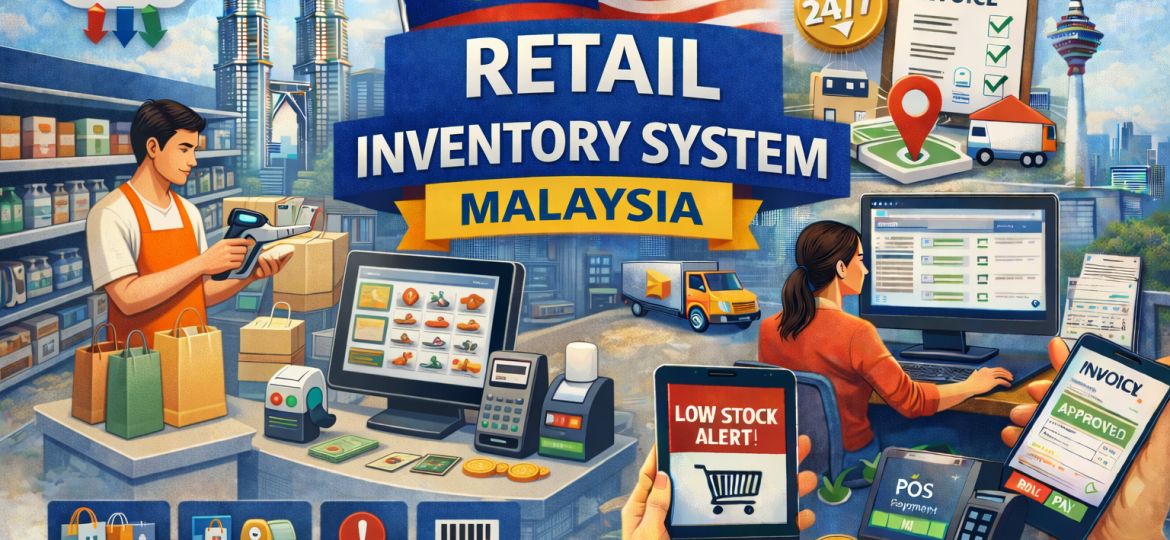
Retail Inventory System Malaysia: The Perfect Solution for Singapore Businesses
Effective inventory management is a critical aspect of any retail business. For small and medium-sized enterprises (SMEs) in Singapore, the challenge of accurately tracking stock levels, managing orders, and optimizing product flow can become overwhelming—especially as the business grows. A retail inventory system from Malaysia can provide a much-needed solution, offering businesses the tools they need to streamline their inventory processes, reduce human error, and improve efficiency.
In this comprehensive guide, we will explore the advantages of adopting a retail inventory system Malaysia for your Singapore business. From improving accuracy to enhancing customer satisfaction, we’ll break down how this software can help you stay competitive in an increasingly digital marketplace.
The Challenges Singapore Retailers Face in Inventory Management
For retail businesses in Singapore, effective inventory management can be the difference between success and failure. However, managing stock manually or with outdated systems often leads to a variety of issues:
-
Stock Discrepancies: Manual tracking can result in inaccurate stock levels, causing overstocking or stockouts. This disrupts sales and impacts customer satisfaction.
-
Inefficient Stock Replenishment: Without real-time visibility, businesses often struggle to replenish stock at the right time, resulting in missed sales opportunities.
-
Time-Consuming Processes: Manual counting and record-keeping take up valuable time that could be spent focusing on growth, customer service, or marketing efforts.
-
Difficulty Scaling: As a retail business expands, it becomes more challenging to manage inventory across multiple locations or sales channels without an integrated system.
Adopting a retail inventory system Malaysia can significantly reduce these issues by automating inventory processes and providing real-time updates that make managing stock easier and more efficient.
What Is a Retail Inventory System?
A retail inventory system is a software solution designed to track and manage the inventory in a retail business. These systems help businesses monitor product quantities, sales trends, order history, and more—automating most of the manual tasks involved in inventory management. By using barcodes or RFID tags, retailers can track products as they are sold, received, or returned, and update stock levels in real time.
For Singapore businesses, a retail inventory system Malaysia offers a powerful way to manage stock across multiple locations, streamline ordering processes, and generate reports to help with decision-making.
Key Features of a Retail Inventory System Malaysia
When selecting a retail inventory system Malaysia, it’s important to ensure the system has the key features that can benefit your retail business. Here are some of the most valuable features to look for:
1. Real-Time Inventory Tracking
Real-time tracking updates stock levels automatically as items are sold, purchased, or returned. This ensures that your business always has up-to-date data, helping to avoid overstocking or running out of stock.
2. Barcode Scanning and RFID Integration
Barcode scanning and RFID integration enable faster and more accurate inventory tracking. Products can be scanned quickly during stocktaking or checkout, reducing errors and speeding up processes.
3. Multi-Location Management
For businesses with multiple stores or warehouses, multi-location support ensures that inventory is tracked across different locations, with data consolidated into a single system. This allows you to optimize stock levels, avoid overstocking at one location, and transfer stock when needed.
4. Automated Reordering
An automated reordering feature helps maintain optimal stock levels by automatically placing orders when inventory reaches a predefined threshold. This ensures that businesses never run out of popular products while avoiding overstocking.
5. Sales and Stock Reporting
A robust reporting system provides in-depth insights into sales trends, stock movement, and product performance. Retailers can use this data to make informed decisions about which products to prioritize, which items are underperforming, and when to reorder products.
6. Integration with Other Systems
Many retail inventory systems integrate with accounting software, point-of-sale (POS) systems, and e-commerce platforms. This integration streamlines processes, reduces errors, and ensures that data flows seamlessly across your business operations.
7. GST Compliance (For Singapore)
As Singapore operates under a Goods and Services Tax (GST) regime, ensuring that your retail inventory system Malaysia handles tax calculations is crucial. The system should be able to accurately apply GST on sales and purchases, helping businesses stay compliant with local tax regulations.
Benefits of Using a Retail Inventory System for Singapore Businesses
Adopting a retail inventory system Malaysia offers several advantages for Singapore-based retailers. Here are some key benefits:
1. Improved Accuracy
By automating inventory tracking and utilizing barcode scanning, a retail inventory system minimizes human error. This results in accurate stock counts, reducing the chances of inventory discrepancies and stockouts.
2. Increased Efficiency
Automating inventory management tasks such as reordering, stock counting, and reporting saves businesses time and labor. Retailers can focus on more important aspects of their business, like customer service or expanding product lines.
3. Better Cash Flow Management
With real-time inventory tracking and automatic reordering, businesses can avoid excess inventory and reduce the amount of capital tied up in stock. This helps maintain healthy cash flow and ensures that products are available when customers need them.
4. Faster Order Fulfillment
By having accurate and up-to-date inventory data, businesses can fulfill customer orders faster. This improves customer satisfaction and strengthens relationships, as customers receive their products in a timely manner.
5. Scalability
As your retail business grows, a retail inventory system Malaysia can scale with you. Whether you’re opening new stores, expanding your product range, or selling across multiple platforms, these systems can handle the increased complexity and streamline your processes.
6. Data-Driven Decision Making
A robust retail inventory system provides valuable insights into sales trends, inventory turnover, and product performance. This data helps businesses make more informed decisions, such as which products to promote or when to discount slower-moving items.
Cost of Retail Inventory System Malaysia
The cost of a retail inventory system Malaysia can vary depending on the features, number of users, and customization required. Here’s a rough breakdown of pricing:
1. Basic Plans
Basic plans typically start from $20 to $50 per month. These plans offer core features like real-time tracking, barcode scanning, and basic reporting. They are suitable for small businesses with simpler inventory needs.
2. Mid-Tier Plans
Mid-tier plans range from $100 to $300 per month. These plans offer more advanced features such as multi-location support, automated reordering, and integrations with accounting or POS systems.
3. Enterprise Solutions
Larger businesses with complex inventory needs can expect to pay upwards of $500 per month for enterprise-grade solutions. These systems often include advanced analytics, customizations, and priority support.
It’s important to evaluate the total cost of ownership (TCO), including implementation fees, user training, and any additional integrations you may need.
Comparing Retail Inventory System Malaysia to Other Options
When choosing a retail inventory system for your business, it’s important to compare Malaysian providers with other regional and global options. Here’s how retail inventory system Malaysia stacks up against competitors:
1. Pricing and Local Support
Malaysian-based systems are often more affordable compared to global solutions like Shopify or Square. In addition, local providers typically offer better customer support and local compliance with Singapore’s GST requirements.
2. Customization and Local Knowledge
Retail inventory systems Malaysia are often tailored to meet the specific needs of Southeast Asian businesses, including regulatory compliance and integration with regional payment gateways. Global providers might require more customization to meet local tax laws.
3. Integration with Regional Platforms
Malaysian systems generally offer better integration with local payment processors, shipping services, and e-commerce platforms used in Southeast Asia. For businesses operating in Singapore, this can reduce the hassle of adapting international systems to meet local requirements.
Frequently Asked Questions (FAQs)
1. What is a retail inventory system?
A retail inventory system is a software solution designed to help businesses track and manage their stock, sales, and orders. It automates key tasks such as inventory tracking, reordering, and generating reports, improving accuracy and efficiency.
2. Why should I use retail inventory software for my business in Singapore?
A retail inventory system Malaysia helps Singapore businesses automate inventory management, reduce errors, save time, and improve cash flow. It also provides valuable insights for better decision-making and helps businesses scale efficiently.
3. How much does a retail inventory system Malaysia cost?
Pricing typically ranges from $20 to $50 per month for basic plans, $100 to $300 for mid-tier plans, and upwards of $500 per month for enterprise solutions, depending on the features and number of users.
4. Can retail inventory software integrate with my existing systems?
Yes, most retail inventory systems can integrate with accounting software, POS systems, and e-commerce platforms to streamline business operations and reduce manual data entry.
5. Is retail inventory software easy to use?
Yes, most retail inventory systems are designed to be user-friendly and require minimal training. Many providers offer customer support and training materials to help businesses implement the software smoothly.
Conclusion: Optimize Your Retail Business with a Retail Inventory System Malaysia
For Singapore businesses, adopting a retail inventory system Malaysia can be a game-changer. By automating inventory tracking, optimizing stock levels, and integrating with other business tools, you can improve efficiency, reduce errors, and make better data-driven decisions. This solution not only saves time and money but also improves customer satisfaction, allowing your business to scale more efficiently.
If you’re looking to streamline your retail operations and stay competitive in today’s fast-paced market, investing in a retail inventory system Malaysia is a smart move. Explore the available options and choose the one that best meets your business needs to ensure smoother operations and future growth.
